


/file/publisher-c1a3f893382d2b2f8a9aa22a654d9c97/2025/11/189ecd9ccc6a0fadd6a0021fa511a955.jpg)

MPs submit bill to overhaul KL governance, propose new council
The government backbenchers are instead seeking the introduction of a councillor-based governance system for the nation’s capital.
The MPs...
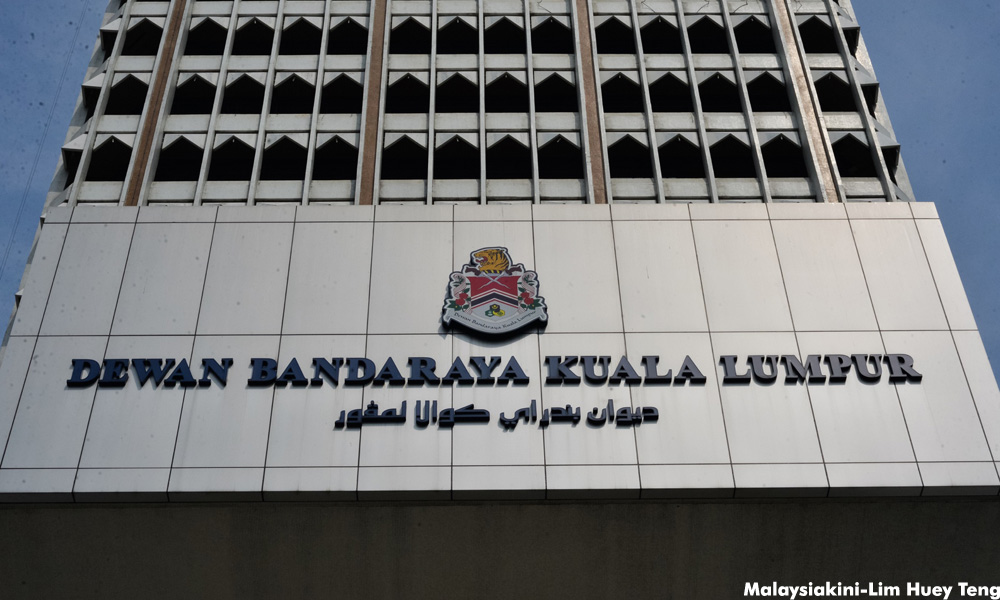
Seven Kuala Lumpur MPs have submitted a Private Members’ Bill seeking to amend the Federal Capital Act 1960, in what they describe as a long-overdue reform to curb the concentration of power in the hands of Kuala Lumpur’s mayor.
The government backbenchers are instead seeking the introduction of a councillor-based governance system for the nation’s capital.
The MPs - Nik Nazmi Nik Ahmad (Setiawangsa), Teresa Kok (Seputeh), Zahir Hassan (Wangsa Maju), Tan Kok Wai (Cheras), Lim Lip Eng (Kepong), P Prabakaran (Batu), and Fong Kui Lun (Bukit Bintang) - said the Bill follows the recommendations of the bipartisan Public Accounts Committee (PAC).
The recommendations, issued in August 2025, called for the city’s administration to be restructured to align with the Local Government Act 1976.
“Today, the DBKL (Kuala Lumpur City Hall) has reached high-income status. The city council is budgeted to spend RM2.835 billion in 2025, slightly below Selangor but ahead of Johor.
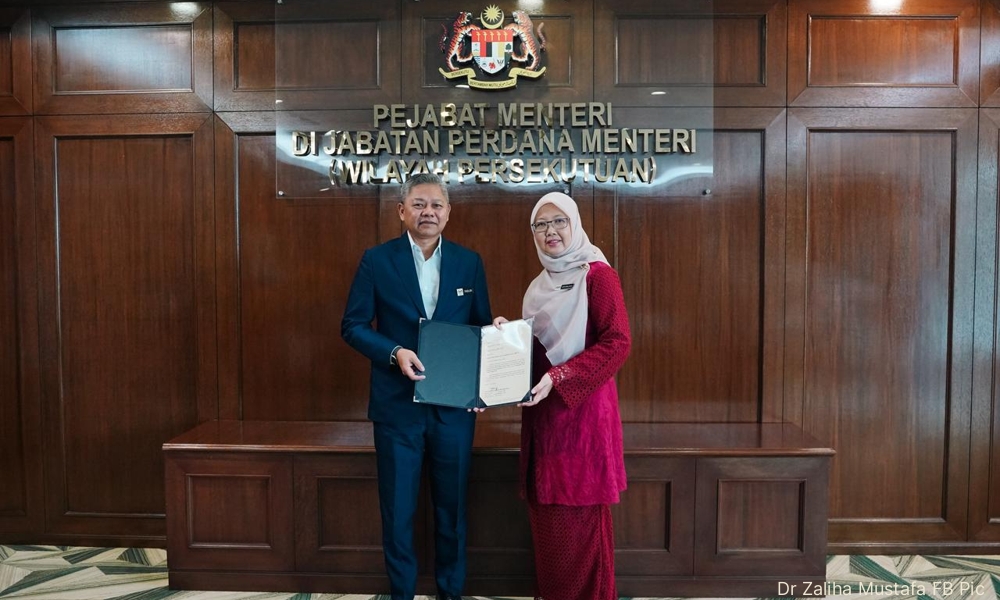
“However, it is arguable that almost unlimited authority is vested with the individual mayor, traditionally a civil servant, with only minimal checks and balances from the board of advisors and the minister in the Prime Minister’s Department in charge of the Federal Territories.
“We are of the further view that this Bill is an inclusive policy that will ensure that even when the majority of MPs in Kuala Lumpur do not belong to the federal government (as was the case during 2008-2018 and 2020-2022), the voices of the residents of the capital will be represented in the DBKL,” they said.
The MPs added that the proposed amendment would help fulfil Pakatan Harapan’s manifesto to “empower democracy and transparency in DBKL through systematic methods”, including ensuring representation that “reflects the interests of the people, not developers”.
They also reminded that 10 of Kuala Lumpur’s 11 MPs were elected based on the promises made in this manifesto.
“The various public controversies affecting certain urban areas in recent times, including in Kuala Lumpur, make this reform all the more urgent,” they added.
The MPs said the Bill offers a “practical pathway towards greater democratisation”, envisaging a structure where the mayor becomes “first among equals”, supported by councillors nominated by elected representatives.
“We are confident the federal government and Parliament will seriously consider this Bill as part of reforms for greater accountability and transparency in our capital city,” the statement read.
What the bill proposes
The Private Members’ Bill introduces sweeping amendments to the Federal Capital Act 1960.
The Bill calls for the creation of a “Council for the City of Kuala Lumpur” as a body corporate, introducing a formal democratic element to Kuala Lumpur’s governance.
The council would function similarly to the councils of other local authorities.
Under the Bill, a new Section 5B is proposed on the composition of the council, which would comprise:
The commissioner/mayor as chairperson
Two councillors nominated by Kuala Lumpur MPs and appointed by the federal territories minister; and
Additional councillors appointed from among city residents with experience in local government or community affairs.
Councillors would be legally recognised as public servants, bound by conflict-of-interest rules, and limited to two consecutive terms.
The council would also be empowered to form committees, make by-laws, manage public health and sanitation, regulate markets and hawking, oversee public amenities, raise loans, issue debentures, and impose rates with ministerial approval, effectively shifting many municipal functions from an individual mayor to a multi-member body.
Other proposed amendments
Under a new Section 5H, councillors would be required to vacate their positions under various circumstances, including criminal convictions for fraud, dishonesty, corruption, or any offence carrying more than two years’ imprisonment.
The provisions also mandate removal for bankruptcy, mental incapacity, or conduct bringing the council into disrepute.
The Bill also introduces comprehensive conflict of interest rules under another new Section 5I, requiring councillors to disclose any pecuniary interest - direct or indirect - in contracts or matters under council consideration.
This extends to interests held through company memberships, partnerships, or employment, and notably includes spousal interests.
Councillors must also withdraw from meetings while such matters are being discussed, with exemptions only for interests as ordinary ratepayers or consumers of council services.
Violations of these disclosure requirements carry serious penalties, with convicted councillors facing fines of up to RM5,000, imprisonment for up to one year, or both.
Courts are additionally empowered to order forfeiture of any profits gained through undisclosed interests, and any councillor convicted under these provisions would be automatically disqualified from continuing in office.
The council’s secretary is also required to maintain a register of all disclosures, open to inspection by other councillors at reasonable hours.
Discipline, order, and other notables
The Federal Capital Act amendment bill would also grant the proposed council sweeping authority to discipline its officers and employees, with powers to impose punishments for misconduct or breach of duty.
Under the newly proposed Section 5M, the council may establish rules for maintaining good conduct among its workforce, though any disciplinary action against heads of department or their deputies would require prior approval from the state authority.
The council would also be empowered to suspend accused officers pending investigations, with suspended staff entitled to receive between half and their full salary during the suspension period.
The proposed legislation extends the council's authority to encompass comprehensive employment regulations, including the power to determine qualifications, tenure, duties, and terms of service for all officers and employees.
This would cover a broad spectrum of employment matters, from maternity benefits and rest days to hours of work, overtime, holidays, leave entitlements, and retrenchment and retirement benefits. All such rules would require state authority approval before implementation.
Notably, the section also stipulates that these provisions shall have effect notwithstanding the Employment Act 1955, meaning the council’s own employment rules would take precedence over standard employment legislation where they conflict.
/file/publisher-c1a3f893382d2b2f8a9aa22a654d9c97/2025/10/44f8374c24f6cf6973d8e59a30cf725a.jpg)
/file/1025/46e79499a87080e90d5a36159c53ef58.jpg)
/file/publisher-c1a3f893382d2b2f8a9aa22a654d9c97/2024/07/f6d77216796cf04202526d701fbb61a7.jpg)


Are you sure you want to delete this comment?
This action cannot be undone.